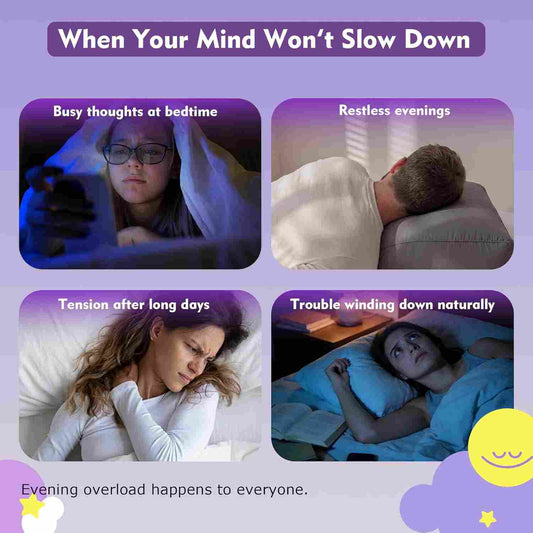
This one is for people whose calendar and nervous system are no longer on speaking terms. Nothing about stress is dramatic, which is exactly why the boring version works and the exciting version does not.
Below is the useful part only — the mechanism, the number to look for on the label, and how to fit stress into a routine you will not abandon by Friday. Stress is a physical state as much as a feeling, and it changes sleep, digestion and how the body holds magnesium.
How stress is understood to work
None of this is complicated once it is separated from the claims around it. Magnesium, B vitamins and calm-side botanicals support the systems that take the strain.
Worth restating: this is normal-function support, which is a deliberately modest claim. It pairs with movement, daylight and saying no, which are the three things that actually move the needle.
What to look for before you buy
-
Read the label rather than the front of the bottle. An evening format and a morning B vitamin, taken daily rather than in a crisis week.
-
Timing is where most routines quietly succeed or fail. Take it at the point in the day when it is most useful, and hold it there..
-
Judge it against your worst week, not your best one. That is the week the routine has to survive.
If you only change one thing after reading this, make it the timing rather than the dose.
The wider point is that a formula is an input, not an outcome. It supports a system that is already being used.
The boundary
Here is the part that keeps this page honest. If stress is affecting sleep, work or mood for weeks, that is worth professional support rather than a bigger dose.
These statements have not been evaluated by the Food and Drug Administration. This product is not intended to diagnose, treat, cure or prevent any disease.
Keep reading on sleep and calm
Answers, briefly
How long does one container of stress last?
Serving size is the number to read first with stress, and it is often smaller than people expect. If the ratio or the extract strength is missing, that tells you something too.
Should stress be taken every day?
When it comes to everyday use, the useful thing is a fixed time rather than a perfect one. Missing a day here and there is fine; missing a fortnight is not.
What are the signs this is not working?
Medication interactions are the main thing to check, and a pharmacist can do that in a few minutes with stress in hand. Any symptom that is new, persistent or worsening deserves an appointment rather than another formula.
One shelf, one job: everyday nutritional support, with the amounts printed rather than implied.