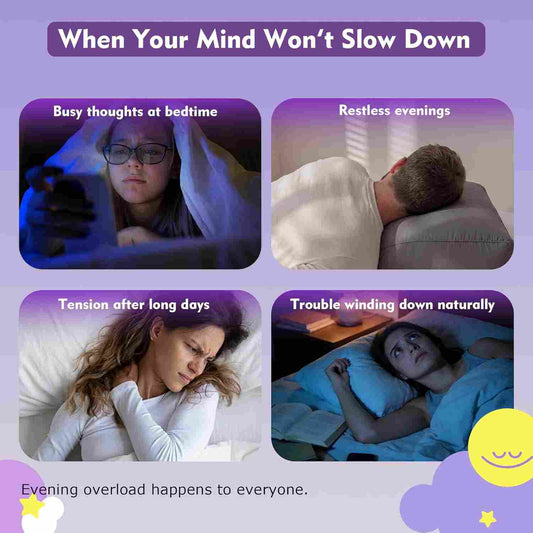
This page is for people whose head starts working the moment the room goes dark. Nothing about racing mind is dramatic, which is exactly why the boring version works and the exciting version does not.
Three things are covered here: what racing mind does in the body, what a serving realistically contains, and how to keep taking it past the first week. A racing mind at bedtime is usually unfinished processing rather than a nutrient deficiency.
What racing mind is doing in the body
The honest version is shorter than the marketing version, so here it is. Magnesium and apigenin support the calm side of the nervous system, and they help most when the day has been closed properly.
The practical consequence is that racing mind belongs beside the obvious habits, not instead of them. It pairs with writing the list down before bed and with getting out of bed if you are still awake after twenty minutes.
How to choose racing mind, and how to take it
-
Start with the numbers rather than the claims. An evening serving with your last meal, taken daily rather than only on the bad nights.
-
Decide when, not just how much. Take it once a day, at a time you will still remember in a busy week..
-
Expect the boring outcome. Normal-function support is not supposed to feel dramatic.
One more thing worth saying: none of this is a substitute for the unglamorous habits, which are sleep, movement and actually eating lunch.
Where support ends and a doctor begins
Every page in this category should say this part out loud. If a racing mind is accompanied by low mood or anxiety that affects daily life, that is worth talking to a clinician about.
These statements have not been evaluated by the Food and Drug Administration. This product is not intended to diagnose, treat, cure or prevent any disease.
Keep reading on sleep and calm
Questions people actually ask
How do I tell whether racing mind is properly dosed?
Serving size is the number to read first with racing mind, and it is often smaller than people expect. Compare cost per serving rather than cost per bottle, which is the only fair comparison.
Does racing mind need to be taken with food?
For everyday use, timing matters far less than repetition: pick a slot and keep it. If you take prescription medication, that is a pharmacist question rather than a label one.
Should I stop taking racing mind before surgery?
There is no list that covers everyone, which is why the sensible rule is to ask before you add racing mind to an existing set of medications. Support is a background habit, which means it is never the right answer to an unexplained symptom.
One shelf, one job: everyday nutritional support, with the amounts printed rather than implied.